
If you have noticed cracked mortar, water around your fireplace, loose bricks, or other signs of chimney damage, one of your first questions is probably: How much will the repair cost?
The honest answer is that chimney repair costs can vary considerably. A relatively minor repair may involve sealing a small crack or replacing a damaged chimney cap. More extensive projects can require masonry restoration, a new chimney crown, flashing replacement, flue-liner work, or reconstruction of part of the chimney.
Because much of a chimney system is difficult to evaluate from the ground, a professional inspection is generally needed before an accurate estimate can be provided. Here are the primary factors that affect the cost of chimney repair in Asheville and throughout Western North Carolina.
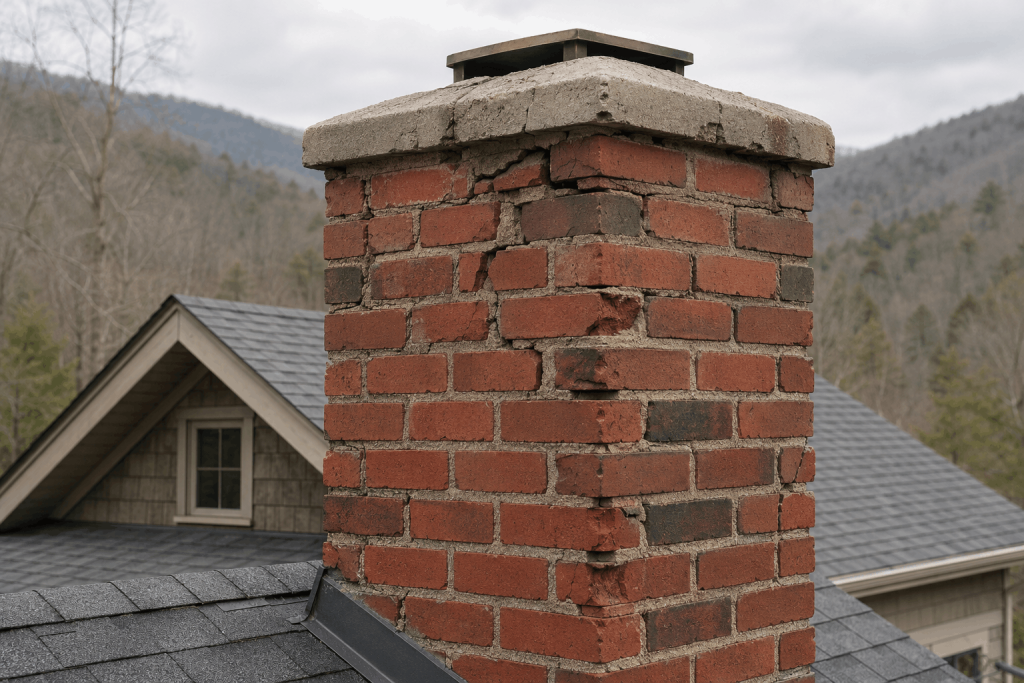
What Affects the Cost of Chimney Repair?
No two chimneys experience exactly the same type or extent of damage. The final repair cost will depend on which components are affected, how severe the damage has become, and how easily the chimney can be accessed.
Type and Extent of the Damage
Small, isolated problems are usually less involved than damage affecting several parts of the chimney. For example, a few deteriorated mortar joints will typically require a different level of work than a chimney with widespread cracking, loose bricks, and water entering the home.
The longer moisture problems and masonry deterioration are left unresolved, the more extensive the eventual repairs may become. What begins as a small crack can allow water into the masonry, where repeated freezing and thawing can cause additional damage.
Mortar and Masonry Repairs
Brick and mortar are exposed to rain, wind, temperature changes, and moisture throughout the year. Asheville’s mountain climate can be particularly hard on exterior masonry because water can enter small openings and expand when temperatures drop below freezing.
Depending on the condition of the chimney, masonry repairs may include:
- Replacing deteriorated mortar joints
- Repairing cracked or loose bricks
- Replacing bricks damaged by moisture
- Sealing openings that allow water intrusion
- Rebuilding a damaged section of the chimney
Minor mortar repairs generally cost less than replacing large sections of damaged masonry. If you can see cracking, missing mortar, loose bricks, or flaking brick faces, it is a good idea to have the chimney evaluated before the damage spreads.
Learn more about chimney masonry repair in Asheville.
Chimney Crown Repair
The chimney crown is the concrete or masonry surface at the top of the chimney. Its job is to direct rainwater away from the flue and the sides of the chimney.
Small crown cracks may sometimes be repaired and sealed. A crown that is badly cracked, deteriorated, or improperly constructed may need to be replaced. The size of the chimney and the severity of the damage will both affect the cost.
Ignoring crown damage can become expensive because water entering through the top of the chimney may damage the bricks, mortar, flue liner, and nearby areas of the home.
Flashing and Chimney Leaks
Flashing seals the area where the chimney passes through the roof. If the flashing is loose, corroded, damaged, or incorrectly installed, water may enter around the chimney.
Repairing a chimney leak may involve more than simply applying sealant. The technician must first determine whether the water is entering through the flashing, chimney crown, masonry, chimney cap, or another part of the system.
The cost will depend on the source of the leak, the amount of damaged material, and whether roofing or interior repairs are also needed.
Chimney Cap or Chase-Cover Replacement
A chimney cap helps keep rain, leaves, debris, and animals out of the flue. Factory-built chimney systems may also have a metal chase cover that protects the top of the chimney enclosure.
The cost of replacement depends on the chimney’s size, the type of system, and whether a standard or custom-fabricated component is required. Replacing a missing or damaged cap early can help prevent more expensive moisture damage inside the chimney.
Flue-Liner Repair or Replacement
The flue liner helps contain heat, smoke, and combustion gases as they travel out of the home. A cracked, deteriorated, or improperly sized liner can create safety and performance concerns.
The cost of flue-liner work depends on:
- The type of existing liner
- The height and configuration of the chimney
- The size of the flue
- The extent of the damage
- The appliance connected to the chimney
- The repair or relining method required
Because the liner runs through the interior of the chimney, some problems can only be identified through a detailed inspection or camera evaluation.
Chimney Height and Roof Accessibility
A chimney on a steep or high roof may require additional equipment and labor to access safely. Roof pitch, chimney height, landscaping, nearby structures, and the location of the chimney can all influence the complexity of the project.
Accessibility does not necessarily mean a repair will be unusually expensive, but it is one of the factors a chimney professional must consider when preparing an estimate.
Can You Estimate Chimney Repair Costs Without an Inspection?
Pictures can help identify visible damage, but they may not reveal the full extent of the problem. Water entering near a chimney, for example, does not automatically mean the flashing is responsible. The source could be the crown, cap, masonry, roof connection, or a combination of issues.
An inspection allows the technician to determine:
- Where the damage is located
- What caused the problem
- Whether the chimney is safe to use
- Which repairs are necessary
- Whether surrounding components have also been affected
This helps avoid paying for a surface-level repair that does not address the actual cause.
When Does Chimney Damage Need Immediate Attention?
Some chimney problems should be evaluated promptly, especially if they may affect the safe operation or structural stability of the system.
Contact a chimney professional if you notice:
- Loose or falling bricks
- Large cracks in the chimney
- Water entering near the fireplace
- Pieces of tile or masonry in the firebox
- Smoke entering the room
- A damaged or missing chimney cap
- White staining on the exterior masonry
- Rust on the damper or fireplace components
- A leaning chimney
- A recent chimney fire
If you are unsure whether the fireplace is safe to operate, avoid using it until the chimney has been inspected.
Is It Better to Repair Chimney Damage Early?
In many cases, yes. Chimney damage rarely improves on its own. Cracks and openings allow additional water into the system, which can accelerate deterioration and increase the amount of material that eventually needs to be repaired.
Addressing a damaged cap, small crown crack, deteriorated mortar, or early-stage leak may help prevent more extensive masonry and interior damage later.
Get a Chimney Repair Estimate in Asheville, NC
The best way to determine the cost of your chimney repair is to have the entire system properly evaluated. Emberstone Chimney Solutions provides chimney inspections, masonry repairs, leak-related repairs, relining, and other chimney services in Asheville and surrounding Western North Carolina communities.
Our team will identify the source and extent of the damage, explain the recommended work, and provide an estimate based on the needs of your chimney.
Call 828-469-0533 or contact Emberstone Chimney Solutions to schedule an inspection or request a chimney repair estimate.